 BISM
BISM / CASE STUDIES
The HATS case study
One of the world’s deepest and Asia’s longest deep-tunnel sewer systems provides a real engineering setting for large-scale sewer process modelling.
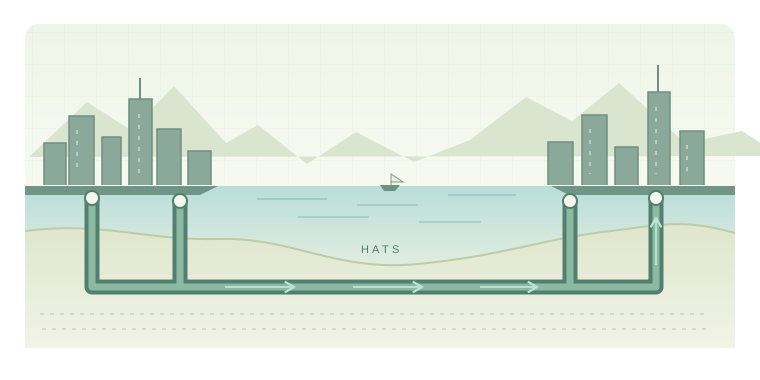
THE HATS CASE
HATS: tested beneath Hong Kong Harbour
One of the world’s deepest and Asia’s longest deep-tunnel sewer systems provides a real engineering setting for large-scale sewer process modelling.
44 kmNetwork length: HATS 1 + 2A
170 mMaximum burial depth
2.45 million m³/dWastewater conveyance scale
89%Sulfide formed downstream
Long-distance anaerobic conveyance creates severe sulfide challenges in HATS. HATS 1 generates approximately 1,400 kg of sulfide daily, with outlet H₂S peaks exceeding 720 ppm. Commissioned by Hong Kong’s Drainage Services Department, the BISM team worked with AECOM to investigate the system, reproduce sulfide dynamics and explain why 89% of sulfide formation is concentrated in downstream sections, informing targeted control.